 ← Home
Why Does Bacalar Lagoon Have So Many Shades of Blue?
The famous colors of Bacalar are not a filter. They are the visible result of water, light, limestone, depth and the extraordinary geology hidden beneath the Lagoon of Seven Colors.
Look across Bacalar Lagoon and the water can shift from pale turquoise to brilliant aqua, intense blue and deep indigo within a surprisingly short distance. But what actually creates these colors?
Bacalar is commonly known as the Lagoon of Seven Colors, but the name should not be interpreted too literally. There are not seven permanent bands of color painted across the water.
Instead, visitors see a constantly changing spectrum of blues and greens produced by several natural factors working together: water depth, the limestone-rich bottom, water clarity, underwater topography and sunlight.
Add Bacalar’s unusual karst geology, deep submerged depressions, cenotes and groundwater system, and the result is one of the most visually distinctive freshwater landscapes in Mexico.
Is Bacalar Really Seven Different Colors?
Not exactly — and that makes the lagoon even more interesting.
“Seven Colors” is a poetic way of describing the remarkable variety of tones visible across the lagoon. Depending on where you are standing, the time of day and the conditions, you may see pale cyan, turquoise, aquamarine, blue-green, sapphire and much darker blue.
The lagoon is better understood as a continuous spectrum of changing shades rather than seven exact, permanently defined colors.
What Creates Bacalar’s Colors?
No single ingredient is responsible. Bacalar’s appearance comes from the interaction of several physical and geological factors.
Shallow vs. Deep Water
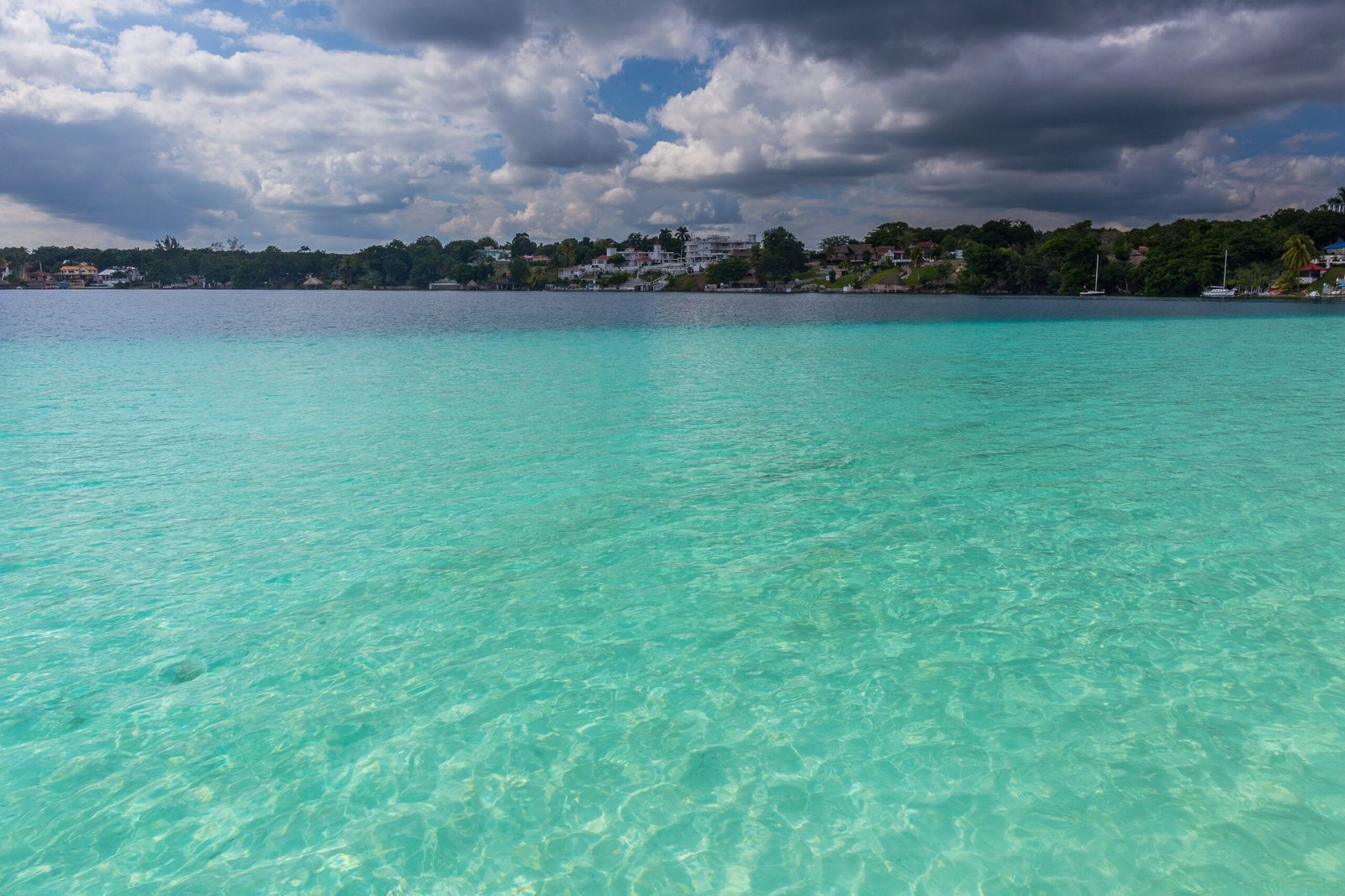
Shallow zones often look lighter and more turquoise, while deeper areas can appear increasingly dark blue.
Limestone & Carbonate
Light-colored carbonate sediments beneath shallow water can reflect more light back toward the surface, helping produce brilliant pale blues and turquoise tones.
Exceptionally Clear Water
Clear water allows sunlight to penetrate and interact with the lagoon floor at greater depths than it could in highly turbid water.
Light Changes Everything
The intensity and angle of sunlight influence how much light enters the water, reaches the bottom and returns to our eyes.
Cenotes & Drop-Offs
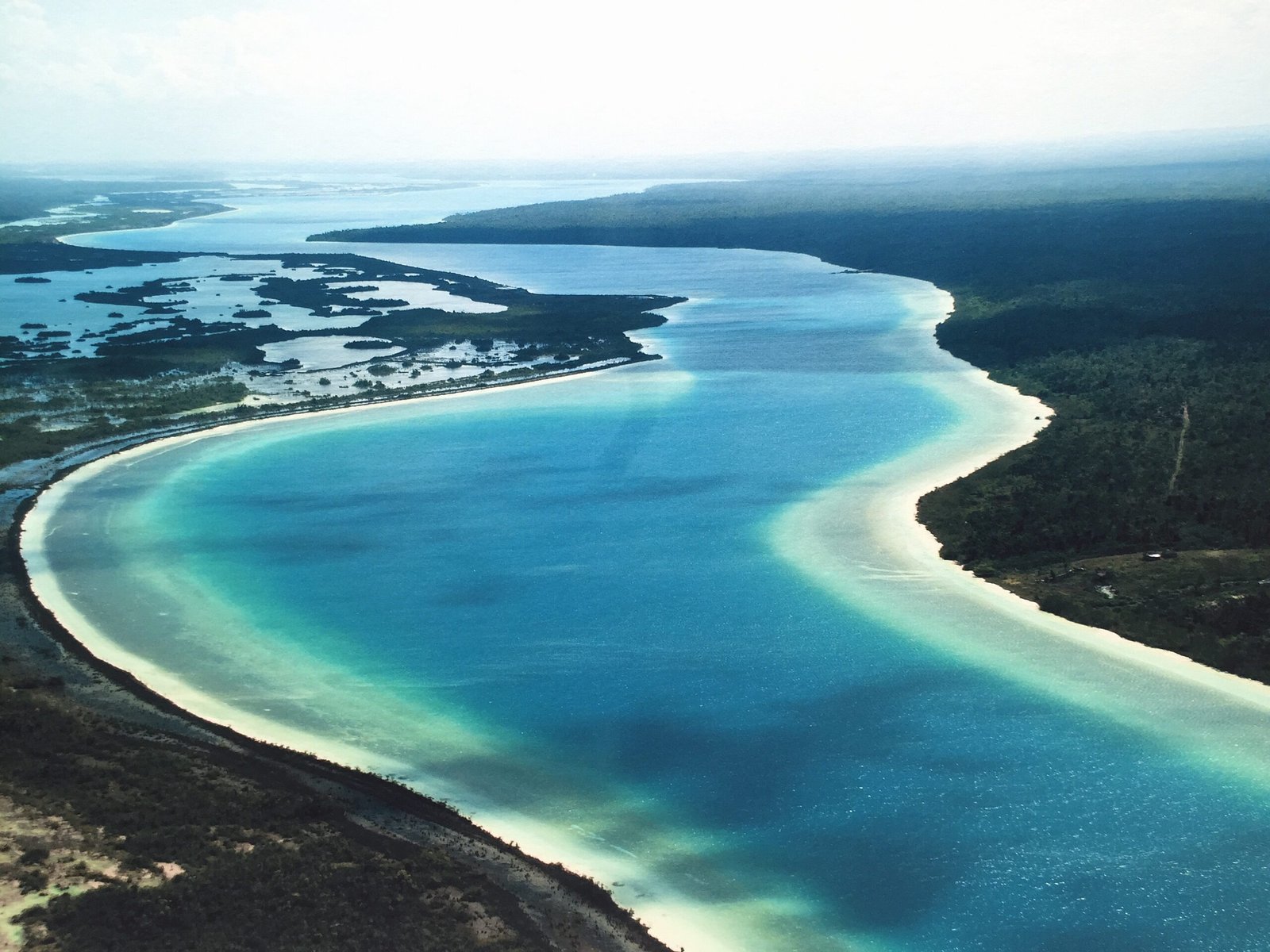
Sudden changes in underwater depth can create dramatic visual boundaries between light turquoise water and much deeper blue.
A Karst Landscape
Bacalar exists within the limestone geology of the Yucatán Peninsula, where water dissolves rock and creates underground drainage systems, cavities and cenotes.
Why Does Water Depth Change the Color?
Depth is one of the easiest factors to understand when looking across Bacalar.
In very shallow areas, sunlight can reach the pale bottom and reflect back through the clear water. This can make the lagoon appear almost luminous — sometimes closer to pale turquoise than conventional blue.
As the water becomes deeper, less reflected light returns from the bottom. The optical properties of water itself become more important and the visible color shifts toward stronger blues.
Why Does Clear Water Look Blue?
Water does not transmit every color of visible light equally. As sunlight travels through water, longer wavelengths toward the red end of the spectrum are absorbed more readily than blue wavelengths.
This is one reason sufficiently deep, clear water tends to appear blue.
At Bacalar, this natural optical behavior combines with the lagoon’s pale carbonate bottom and extreme variations in depth. The result is not a single blue but many neighboring shades.
The lagoon is not blue because its water contains a blue substance. What we see is the result of sunlight interacting with water, depth, the bottom and the underwater landscape.
The Limestone Beneath Bacalar
To understand Bacalar, it helps to understand the Yucatán Peninsula itself.
Much of the peninsula is built from carbonate rock, particularly limestone. Rainwater and groundwater gradually dissolve this rock, producing the caves, underground drainage systems, sinkholes and cenotes for which the region is famous.
Bacalar is part of this karst landscape. Its water, submerged depressions and surrounding groundwater cannot be separated from the geology beneath the surface.
How Was Bacalar Lagoon Formed?
Bacalar is a long, narrow tropical karstic lake developed within the carbonate landscape of southern Quintana Roo.
The underwater terrain is far from flat. Modern bathymetric research has documented a main basin with an average depth of roughly nine meters, along with substantially deeper zones and submerged dolines in the southern part of the lagoon.
Some of these depressions reach more than 60 meters below the surface.
These dramatic variations help explain why a person viewing the lagoon from above can see neighboring areas with completely different tones.
Cenotes: Dark Blue Windows Into the Lagoon
Cenotes are one of the most visible expressions of the Yucatán’s karst geology.
They form where limestone has dissolved or collapsed, creating cavities that connect with groundwater.
In Bacalar, deep submerged depressions can appear dramatically darker than the surrounding shallows. From above, the transition can be striking: bright turquoise may suddenly become deep blue over a relatively short distance.
Bacalar Is Connected to a Hidden Aquifer
One of the most important parts of Bacalar is something visitors cannot see directly: the groundwater system beneath the Yucatán Peninsula.
Hydrological research indicates that groundwater plays a major role in supplying the lagoon, with water entering through the karstic system and deep shoreline features.
This connection means that Bacalar is not simply an isolated container of water. It is part of a much larger hydrological landscape.
Why Does Bacalar Look Different Throughout the Day?
Visit the same place in Bacalar in the morning, at midday and beneath cloudy skies and it may look surprisingly different.
When the sun is high and intense, more light penetrates the water and shallow carbonate areas can become exceptionally bright.
Lower sun angles, clouds, wind and surface reflections can soften or change the colors we perceive.
This is one reason photographs of Bacalar can look remarkably different even when they were taken from almost the same location.
Is Bacalar Blue Just Because It Reflects the Sky?
No.
The sky can contribute to reflections on the surface, especially when conditions are calm, but it does not explain the lagoon’s entire range of colors.
If sky reflection were the only explanation, we would not see such dramatic color differences between neighboring shallow and deep areas under the same sky.
Depth, underwater terrain, the light-colored bottom and the optical behavior of the water are all essential parts of the picture.
See the Science in the Landscape
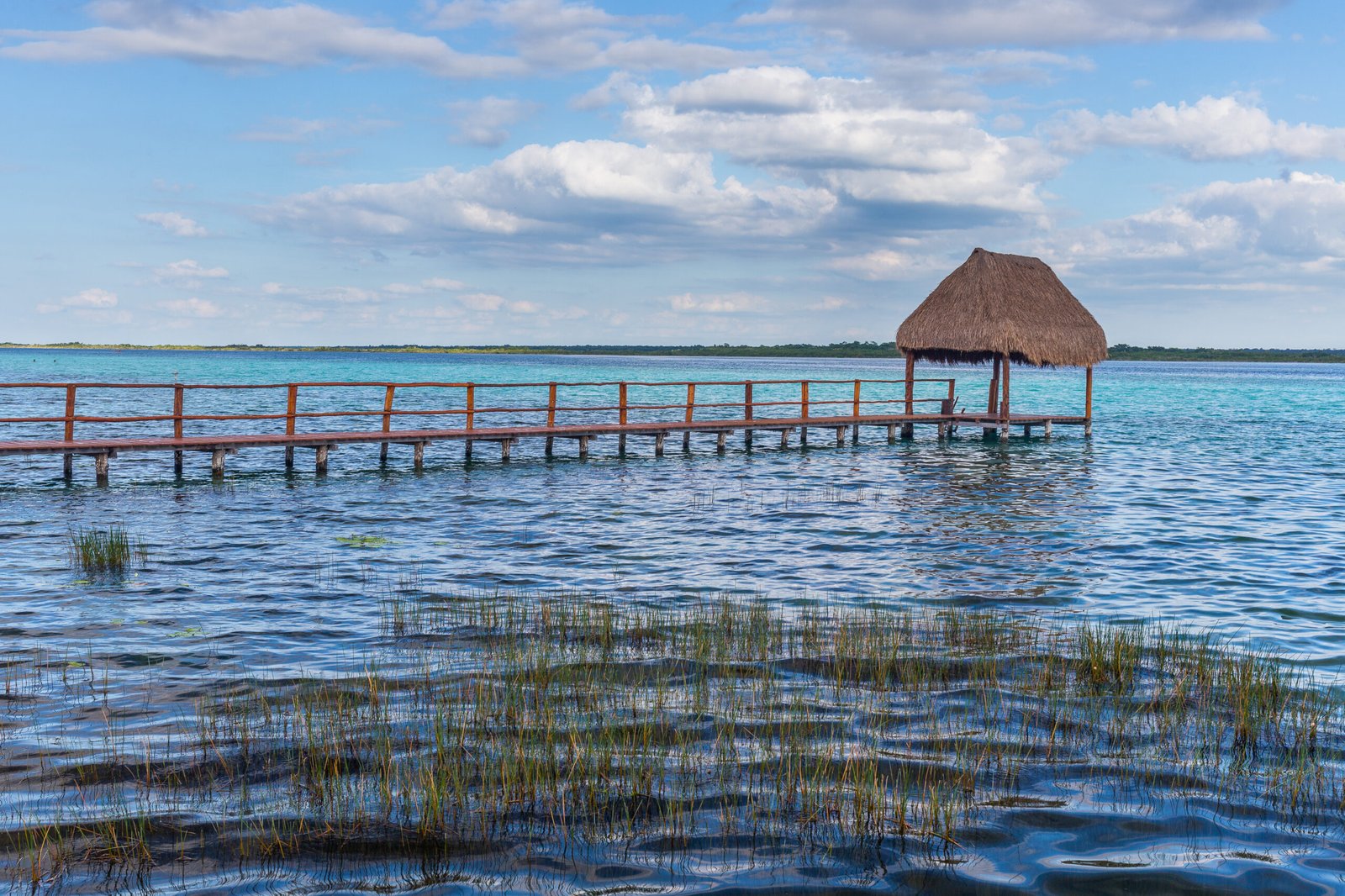
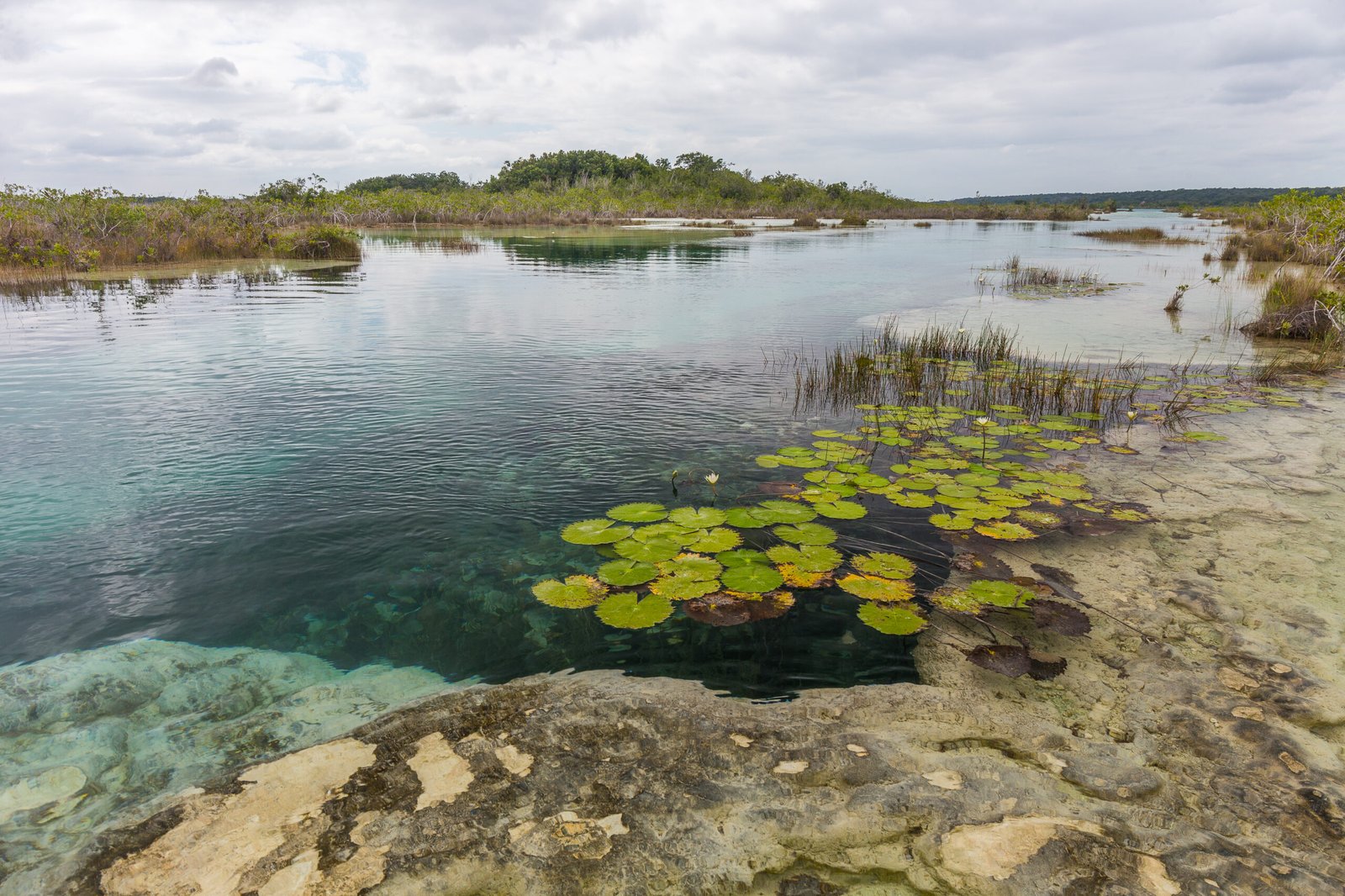
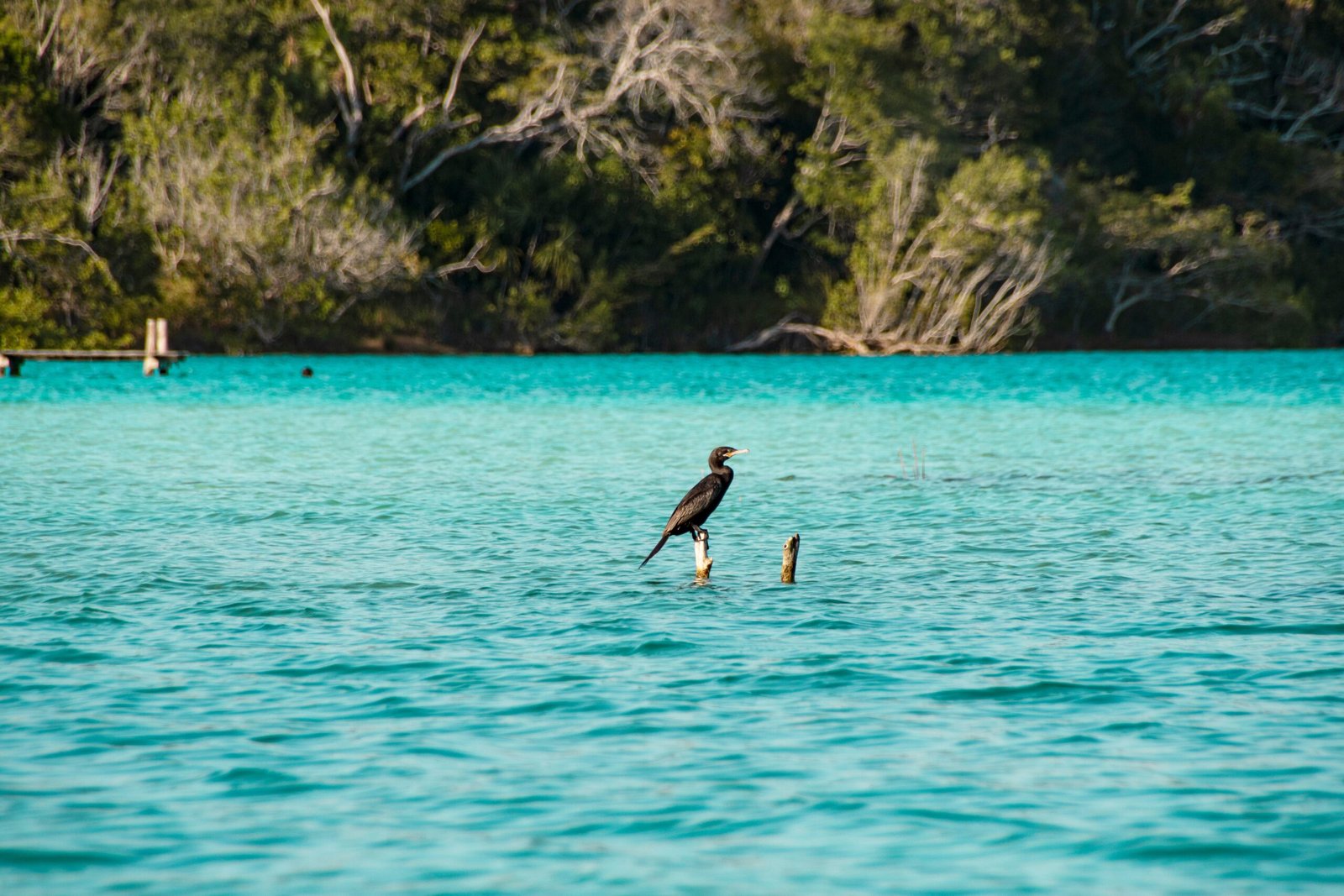
From the air, at water level and along the shoreline, Bacalar’s changing depths and extraordinary clarity create a constantly shifting palette.

Where Do Stromatolites and Microbialites Fit Into the Story?
Bacalar’s geology also helps support another extraordinary feature of the lagoon: extensive freshwater microbialites.
These rock-like formations are built through interactions between microbial communities, water chemistry and carbonate minerals. Scientific analyses of Bacalar microbialites have found them to be composed predominantly of calcium carbonate.
They are fascinating in their own right, but they should not be described as the single reason Bacalar has seven colors.
Instead, microbialites are another expression of the same unusual combination of geology, water chemistry and biological processes that makes Bacalar such a remarkable freshwater environment.
Discover their story in our complete guide to Bacalar’s stromatolites and microbialites .
Why Water Quality Matters to Bacalar’s Colors
The spectacular appearance of Bacalar depends in part on something that can easily be taken for granted: water clarity.
Bacalar has historically been characterized by relatively nutrient-poor, clear-water conditions. When excess nutrients, sediments or pollutants enter an aquatic system, they can change biological communities and reduce water quality.
Scientific studies of Bacalar have already documented concerns related to increasing nutrient levels and human pressure around the lagoon.
Protecting Bacalar therefore means protecting more than a beautiful view. It means preserving the physical, biological and chemical conditions that make the entire ecosystem possible.
Help Keep Bacalar Blue
- Follow local navigation and environmental regulations.
- Never stand, walk or climb on microbialite formations.
- Avoid disturbing mangroves and sensitive shoreline habitats.
- Keep trash, plastics and other waste out of the lagoon.
- Respect areas where swimming or navigation is restricted.
- Choose responsible experiences that treat the lagoon as an ecosystem, not simply as a swimming pool.
Seeing Bacalar Differently
Understanding the science behind Bacalar changes the way you see the lagoon.
A turquoise patch is no longer simply a beautiful color. It may reveal shallow water over a light carbonate bottom.
A sudden dark-blue circle or zone may indicate a dramatic change in depth or an underwater depression connected with the region’s karst geology.
And the difference between the view you see in the morning and the one you photograph later in the afternoon may simply be the lagoon responding to changing light.
Bacalar’s beauty is therefore not separate from its science. The science is part of the beauty.
Continue Exploring Bacalar
For a broader introduction to the destination, read our Ultimate Bacalar Lagoon Guide .
If you are deciding between nature and Maya history during your cruise stop, compare Bacalar vs. Chacchoben to discover which Costa Maya experience fits your travel style.
Frequently Asked Questions
Why does Bacalar Lagoon have seven colors?
Bacalar displays many shades of blue and turquoise because water depth, the light-colored carbonate bottom, water clarity, underwater topography and sunlight all interact. “Seven Colors” describes this visual variety rather than seven permanently defined bands of color.
Is Bacalar really seven exact colors?
No. The name Lagoon of Seven Colors is a descriptive nickname. The lagoon displays a continuous and changing spectrum of turquoise, blue-green, blue and deeper indigo tones.
Why are some parts of Bacalar dark blue?
Darker areas are often associated with greater water depth. Bacalar contains deep zones and submerged karst depressions, so neighboring sections of the lagoon may have dramatically different depths.
Why are shallow parts of Bacalar turquoise?
In shallow, clear areas sunlight can reach the light-colored carbonate bottom and reflect back through the water. This can produce very bright turquoise and aqua tones.
Is Bacalar blue because it reflects the sky?
Surface reflection contributes to what we see, but it is only part of the explanation. Water depth, bottom composition, clarity and underwater topography explain why different parts of the lagoon can show different colors beneath the same sky.
How deep is Bacalar Lagoon?
Modern bathymetric research places the average depth of the main lagoon at roughly nine meters, while some submerged dolines in the southern area reach depths of more than 60 meters.
Do stromatolites create Bacalar’s seven colors?
Not by themselves. Bacalar’s microbialites are an important part of the lagoon’s ecosystem and carbonate environment, but the visible color differences are mainly associated with depth, bottom characteristics, water clarity, underwater topography and light.
Does Bacalar look the same every day?
No. Sun angle, cloud cover, wind, surface conditions and water level can all change how the colors appear throughout the day and between visits.
Now See the Seven Colors for Yourself
Discover Bacalar beyond the photographs. Experience the Lagoon of Seven Colors, its extraordinary freshwater landscape and the natural systems that make it one of southern Quintana Roo’s most remarkable destinations.
Scientific Sources & Further Reading
- Ciencia UNAM — Laguna de Bacalar: freshwater microbialites, depth and changing water tones.
- Water — Morphometry and hydrometeorological variability of Bacalar Lagoon, Yucatán Peninsula.
- PLOS ONE — The microbiome of modern microbialites in Bacalar Lagoon, Mexico.
- Geological Society of America — Hydrologic and geochemical dynamics of the karstic aquifer supplying Laguna Bacalar.
- Geobiology — Microbial diversity and biomarker analysis of modern freshwater microbialites from Laguna Bacalar.